

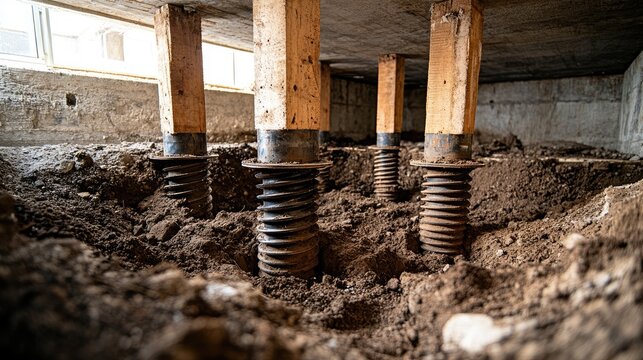

If you own an older home in Carlton, there is a reasonable chance your foundation is under more stress than you realise. Underpinning Carlton Melbourne is one of the most searched structural topics in Melbourne’s inner north — and for good reason. Carlton sits on Melbourne’s reactive clay belt, where seasonal soil movement quietly works against timber stumps and concrete foundations year after year. Cracked walls, sloping floors, sticking doors, and visible gaps between floors and skirting boards are not cosmetic annoyances. They are early warning signals from a structure telling you it needs attention. This guide covers exactly what underpinning means, when reblocking is the right answer, what the repair process looks like, and how Melbourne homeowners can protect the long-term value of their property.
At VIC Wide, we specialise in underpinning, reblocking, foundation repairs, restumping, floor levelling, and structural inspections across Melbourne. Our team has worked in Carlton and surrounding suburbs for years — and we understand the soil conditions, the housing stock, and the structural challenges unique to Melbourne’s inner-suburban landscape.
Quick summary: Melbourne’s reactive clay soil causes ongoing foundation movement. Older Carlton homes on timber stumps are particularly vulnerable. Warning signs include sloping floors, cracked walls, and sticking doors. The right solution — whether underpinning or reblocking — starts with a professional inspection.
Melbourne’s Reactive Clay Soil — Why Carlton Homes Are Particularly Vulnerable
Melbourne is built predominantly on reactive clay soils — and Carlton sits squarely within one of the most active zones. These soils expand significantly when wet and contract sharply when dry. That cycle repeats with every season: wet winters cause the ground to swell upward, and dry summers cause it to shrink and drop. Timber stumps installed in homes built between the 1900s and 1970s were never engineered to withstand this level of long-term ground movement.
The result is predictable. Stumps rot, compress, or shift unevenly. The floor frame they support begins to sag. Walls crack. Door frames rack out of square. Floors develop a perceptible slope from one end of a room to the other. In Carlton and surrounding inner suburbs — including Brunswick, Fitzroy, Collingwood, and Parkville — this pattern of deterioration is extremely common in the older housing stock.
Understanding this is important because it shapes the solution. Foundation movement in Melbourne is rarely a one-off event. It is an ongoing interaction between the structure and the ground beneath it. Any repair strategy that ignores the soil conditions will not address the root cause — and problems will return.
What Does Underpinning Actually Mean?
Underpinning is the process of strengthening and stabilising the foundation of an existing building. Where the original foundation has lost its load-bearing capacity — due to soil movement, subsidence, erosion, or poor original construction — underpinning extends the foundation deeper or wider so it bears on more stable ground.
In Melbourne’s inner suburbs, underpinning is most often required when reactive clay movement has caused foundation settlement that is too significant to address through reblocking alone. It is also used when extensions or renovations change the load distribution of a structure, or when drainage problems have caused localised soil erosion beneath footings.
The word “underpinning” in everyday language means the foundational support or basis of something. In construction, it refers literally to work done beneath the pin — the structural foundation — of a building. Related terms used in the Australian industry include foundation stabilisation, foundation repair, and subfloor remediation.
Underpinning vs Reblocking — What Is the Difference?
This is one of the most common questions Melbourne homeowners ask — and it is worth answering carefully because the distinction determines which solution is right for your home.
| Factor | Underpinning | Reblocking / Restumping |
|---|---|---|
| What it addresses | Foundation depth, load bearing, and structural settlement | Deteriorated or failed subfloor stumps |
| Structure affected | Concrete footing or foundation slab | Timber or concrete stumps beneath the floor frame |
| Common triggers | Soil subsidence, erosion, excessive settlement | Stump rot, stump compression, uneven floors |
| Melbourne relevance | Required when clay movement causes foundation failure | Extremely common in pre-1980s Melbourne homes |
| Typical outcome | Stabilised, deepened foundation | Levelled floor, replaced stumps |
Reblocking in Melbourne — also referred to as restumping — is the more frequently required service for Carlton’s older housing stock. Where timber stumps have rotted or compressed over decades, reblocking replaces them with new concrete stumps, restoring the floor frame to a level position and eliminating the cascading wall and door damage that follows stump failure.
Underpinning is typically required where the concrete or masonry foundation itself has moved or degraded — a more involved structural repair. A professional inspection will determine which applies to your property.
⚠ Warning Signs Your Carlton Home Needs Foundation Attention
Many Melbourne homeowners live with early warning signs for years — attributing them to the age of their home or assuming they are cosmetic issues. By the time the symptoms become undeniable, the underlying structural movement has often progressed significantly. Recognising the signs early can save considerable cost and disruption.
- Uneven or visibly sloping floors — particularly noticeable when walking from one end of a room to another
- Bouncy or springy feel underfoot — a sign the floor frame is no longer adequately supported by its stumps
- Cracks in internal walls or ceilings — diagonal cracks near door and window corners are particularly telling
- Doors and windows that stick, jam, or no longer close properly — caused by frame racking as the structure settles unevenly
- Visible gaps appearing between floors and skirting boards, or between walls and ceilings
- A home built before 1980 — Melbourne’s older housing stock is the highest-risk category for stump and foundation deterioration
- Evidence of subfloor moisture — damp smells, visible moisture beneath the home, or surface dampness on lower floors
- External cracking in brickwork or mortar lines — particularly step cracking in brick veneer
If you are noticing any combination of these signs, the next step is a professional subfloor and foundation inspection — not a cosmetic repair. Patching cracks without addressing the underlying movement will result in those cracks returning, often worse than before.
How VIC Wide Approaches Foundation Repairs in Carlton and Melbourne
At VIC Wide, we believe homeowners deserve transparency at every stage. Our process is straightforward, clearly communicated, and designed to minimise disruption to your daily life.
Step 1 — Free On-Site Inspection
We come to your home at no cost and thoroughly inspect your foundation, stumps, and structure for any issues. We assess soil conditions, stump condition, floor levels, and all visible structural symptoms before recommending anything.
Step 2 — Detailed Assessment in Plain English
We explain what we found without confusing jargon. You will understand exactly what is happening structurally, why it has occurred, and what the consequences of leaving it unaddressed would be.
Step 3 — Clear Written Quote
You receive a detailed written quote with no hidden costs. Every element of the work is itemised so you know exactly what you are paying for — and why.
Step 4 — Expert Repairs with Minimal Disruption
Our experienced team carries out the underpinning, reblocking, or foundation repair work with care and efficiency. We respect your home, keep the site tidy throughout, and work methodically to avoid unnecessary disruption.
Step 5 — Final Walkthrough
We walk you through the completed work, demonstrate the outcome, answer any remaining questions, and ensure you are completely satisfied before we leave the site.
Reblocking Carlton — What the Process Actually Involves
Reblocking — widely known as restumping throughout Victoria — involves replacing deteriorated or failed stumps beneath the subfloor frame with new concrete or treated timber stumps. For Carlton homes built between the 1900s and 1970s, this is one of the most commonly required structural repairs.
The reblocking process at VIC Wide follows a clear, transparent sequence:
- Free on-site inspection — assessing stump condition, floor levelness, and subfloor environment throughout the home.
- Detailed written quote — itemised, transparent, and issued with no hidden charges or surprise additions.
- Temporary hydraulic jacking — the floor frame is carefully raised to a level position before old stumps are removed.
- New stump installation — concrete stumps are installed at the correct height, properly bedded into stable ground.
- Levelling and final checks — floor levels are verified across the entire home, the structure is inspected, and the home is returned to its correct position.
Concrete stumps are now the standard for Melbourne reblocking work. Unlike timber stumps, they are not susceptible to rot, termite damage, or moisture degradation — meaning the repair is long-lasting and the subfloor environment remains stable over time.
If your Carlton home is showing any of the warning signs discussed in this article, house reblocking may be the most cost-effective structural solution available to you.
Floor Levelling Melbourne — When Sloping Floors Become a Structural Problem
Sloping floors are one of the most visible signs of foundation movement in Melbourne’s older homes — and one of the most commonly dismissed. A floor that drops one or two centimetres across a room may feel like a minor inconvenience, but it is a measurable indication that the subfloor structure is no longer level and load-bearing as intended.
In Carlton and surrounding Melbourne suburbs, floor levelling is typically achieved through reblocking — replacing and correctly sizing the stumps beneath the floor frame so the entire floor system returns to a level position. In some cases, where the floor framing itself has warped or twisted over decades, additional remediation to the bearers and joists may be required before levelling can be completed.
Floor levelling in Melbourne is not simply about aesthetics. An unlevel floor places uneven loads on walls, door frames, and ceiling structures — accelerating cracking and increasing the likelihood of more significant damage over time. Addressing it promptly protects both the structural integrity and the long-term value of your home.
Structural Inspections — Why a Professional Assessment Always Comes First
Every foundation repair or reblocking project at VIC Wide begins with a thorough structural inspection — because no two properties are identical. The extent of movement, the condition of existing stumps, the drainage situation beneath the home, the soil type, and the age and construction method of the building all influence the correct repair approach.
For Melbourne homeowners considering a property purchase in Carlton or nearby suburbs, a pre-purchase subfloor and structural inspection is equally important. Identifying foundation issues before settlement allows buyers to negotiate appropriately or factor repair costs into their decision. The Victorian Building Authority provides guidance on building inspection requirements and licensing standards for residential properties in Victoria.
If you are in Carlton or anywhere across Melbourne and concerned about foundation movement, contact VIC Wide for a free on-site inspection. There is no cost, no obligation, and no confusing jargon — just a clear, honest assessment of what your home needs.
Concrete Stumps vs Timber Stumps — What Melbourne Homeowners Need to Know
Most Carlton homes built before 1970 were originally constructed on untreated hardwood timber stumps. At the time of construction, these stumps were adequate — but they were not designed for the long-term reactive soil movement that Melbourne’s clay-rich ground produces. Over decades, moisture, termite activity, and compression reduce their load-bearing capacity significantly.
| Stump Type | Typical Lifespan | Vulnerabilities | Current Use |
|---|---|---|---|
| Untreated Timber | 30–50 years | Rot, termites, moisture, compression | No longer recommended |
| Treated Timber | 50–75 years | Some moisture risk in wet subfloor conditions | Occasionally used |
| Concrete | 75+ years | Minimal — not susceptible to rot or termites | Industry standard for Melbourne reblocking |
When VIC Wide carries out house restumping in Melbourne, concrete stumps are the default choice — because they deliver the longest-lasting result and eliminate the recurring vulnerabilities that come with timber. Once installed correctly on stable ground, they do not require replacement for many decades.
Foundation Repairs Across Melbourne’s Inner and Western Suburbs
While this article focuses on underpinning Carlton Melbourne, VIC Wide services the full breadth of Melbourne’s residential areas. Foundation movement, stump deterioration, and reactive clay damage are not problems confined to any single postcode — they affect older housing stock across the city.
Our team regularly carries out underpinning, reblocking, and foundation repair work across Melbourne including:
- Underpinning Brunswick Melbourne — older terrace homes and Californian bungalows on reactive clay
- Underpinning Footscray Melbourne — post-war housing with ageing timber stump systems
- Underpinning Kew Melbourne — Federation and Edwardian homes with extensive subfloor systems
- Underpinning Yarraville Melbourne — worker’s cottages and weatherboard homes on compressible ground
- Carlton, Fitzroy, Collingwood, Northcote, Richmond, Coburg, Pascoe Vale, and surrounding Melbourne suburbs
If your Melbourne suburb is not listed above, call us directly on 1300 296 939 — we service the wider Melbourne metropolitan area and are happy to discuss your property over the phone.
Preventative Maintenance — Protecting Your Melbourne Foundation Over Time
Foundation repairs address the damage that has already occurred. But once the work is complete, a few straightforward maintenance habits will significantly reduce the likelihood of the same problems recurring — particularly in Carlton’s reactive clay soil environment.
- Maintain gutters and downpipes: Overflowing or blocked gutters direct large volumes of water against the foundation perimeter, saturating the soil unevenly and triggering clay movement.
- Manage surface water drainage: Ensure garden beds and paving do not direct stormwater toward the building. Grading soil away from the foundation perimeter reduces moisture intrusion beneath the home.
- Monitor subfloor ventilation: Adequate airflow beneath the home reduces moisture accumulation, which is a primary accelerant of timber stump deterioration and subfloor structural damage.
- Control large trees and root systems: Tree roots near the foundation actively extract soil moisture, causing localised clay shrinkage and differential settlement beneath the home. Seek arborist advice for any large trees positioned close to the building.
- Schedule periodic inspections: For Melbourne homes built before 1980, a subfloor inspection every five to seven years is a sensible proactive measure — particularly after extended dry summers or significant rainfall events.
The Consumer Affairs Victoria building and renovating resource provides additional guidance for Melbourne homeowners on property maintenance obligations and engaging licensed contractors for structural work.